Facing your first dialysis session can feel overwhelming, but I want you to know this: you are taking a powerful, positive step towards managing your health. With the right preparation, you can walk into your first appointment at an Advanced Renal Care centre feeling confident, informed, and in control. My goal here is to give you a clear, step-by-step guide on how to prepare for private dialysis, turning uncertainty into understanding.
Understanding Your First Dialysis Session: What to Expect
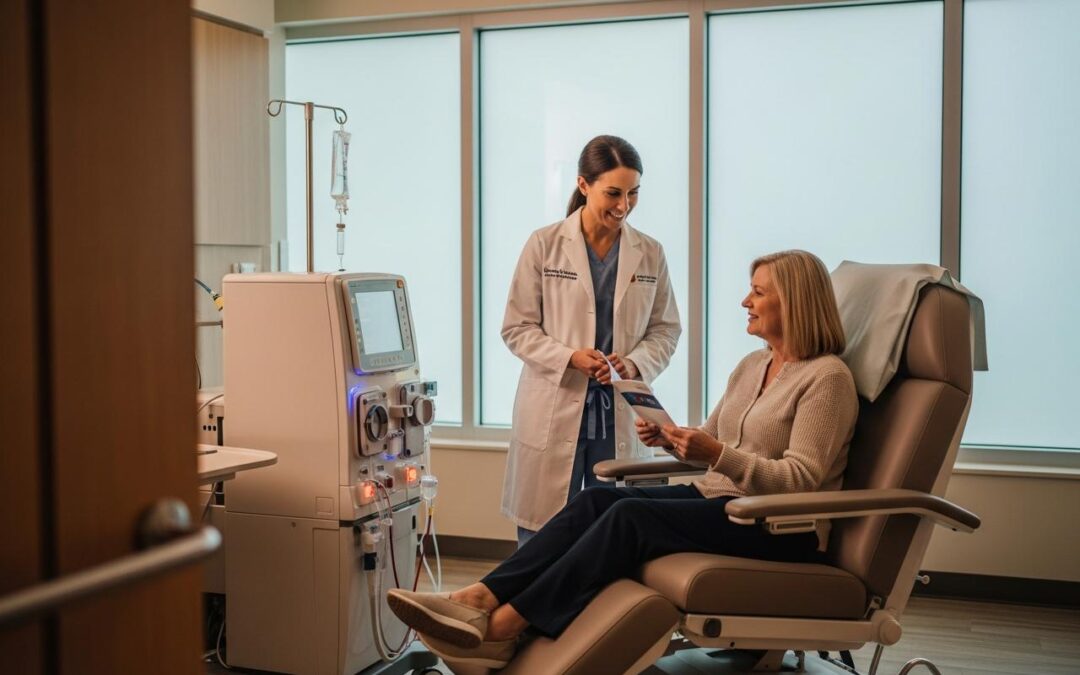
Haemodialysis performs the vital role of filtering waste and excess fluids from your blood when your kidneys cannot. Upon arrival, our dedicated team will guide you through the straightforward process while monitoring your comfort and safety.
- Setup: You will be seated in a specialised chair and connected to the dialysis machine via your vascular access point.
- The Process: Your blood circulates through a dialyser (filter) to be cleaned before returning to your body.
- Duration: A typical session lasts about four hours, giving you time to read, work on a laptop, or rest.
The Most Important Preparation: Your Vascular Access
Vascular access is your dialysis “lifeline,” allowing your bloodstream to be accessed safely and efficiently. Your nephrologist will determine the best surgical option for your needs well in advance of your first session to ensure the site has adequate time to heal and mature.
Vascular Access Options:
- AV Fistula: The “gold standard” involves connecting an artery to a vein. It is the preferred choice as it lasts longer and has a lower risk of infection, though it requires several weeks to mature.
- AV Graft: A synthetic tube used to connect the artery and vein if a natural fistula isn’t suitable.
- Central Venous Catheter: A tube placed in a large vein in the neck or chest, typically used for short-term or urgent dialysis needs.
Your Pre-Dialysis Checklist: The Weeks and Days Before
Proper preparation involves organizing your medical, dietary, and personal needs to make your transition to dialysis as smooth as possible. By coordinating with your care team and planning your sessions in advance, you can focus entirely on your health and comfort.
Your Pre-Dialysis Essentials:
- Logistics: Confirm your transportation to the ARC centre and have your medical documents and adjusted prescriptions ready.
- Dietary Shifts: Work with your dietitian to manage sodium, potassium, and phosphorus intake while focusing on fresh, unprocessed foods.
- The Dialysis Bag: Pack loose, warm clothing (like a jersey or thick socks), headphones, a tablet or book for entertainment, and a kidney-friendly snack.
On the Day: Navigating Your First Treatment
Our team will guide you through every step, from checking your vitals and weight to connecting you gently to the dialysis machine. Your only job is to relax and let us manage the technology while you rest comfortably in your chair.
You may feel tired after your first few sessions as your body adjusts. It is best to arrange a lift home and plan for a quiet, restful afternoon.
Beyond the Physical: Mental and Emotional Preparation
Starting dialysis is a major life adjustment, and it is completely normal to feel a mix of emotions. Acknowledging these feelings is a vital part of your preparation, so we strongly encourage prioritizing your mental health throughout this journey.
Lean on your support system and speak with our staff about any concerns. We can connect you with counselors or organizations like the National Kidney Foundation to ensure you have the emotional support you need.
Why Choose Private Dialysis with Advanced Renal Care?
Choosing private dialysis means choosing a higher level of personalised attention and comfort. At Advanced Renal Care, we pride ourselves on creating an environment that is not just a clinic, but a supportive community. You benefit from our experienced team of nephrologists and nurses, state-of-the-art equipment, and a patient-first philosophy that puts your well-being at the centre of everything we do. We partner with you to create a treatment schedule and care plan that fits your life.
Contact UsFAQs
How long does a typical private dialysis session take?
A standard in-centre haemodialysis session usually lasts for four hours and is typically scheduled three times per week. The exact duration is determined by your nephrologist based on your specific health requirements.
Will the dialysis procedure hurt?
You may feel a brief sting when the needles are inserted into your fistula or graft, similar to a standard blood test. The dialysis process itself is painless. Our nursing staff are highly skilled at making this as comfortable as possible.
Can I still work while undergoing dialysis treatment?
Absolutely. Many of our patients continue to work full-time or part-time. We work with you to find a treatment schedule that accommodates your professional life. The energy boost you get from effective dialysis often makes it easier to manage work.
What should I eat on the morning of my first dialysis session?
Eat a healthy, high-protein breakfast. Avoid high-potassium foods like bananas or oranges and high-sodium foods. A good meal like eggs on toast or a bowl of approved cereal will help you maintain your energy levels during the treatment.
What questions should I ask my nephrologist before starting?
You should feel empowered to ask anything. Good starting questions are: “What are my specific fluid and dietary restrictions?”, “What are the potential side effects I should watch for?”, and “Who is my primary contact at the centre if I have a question between sessions?”.